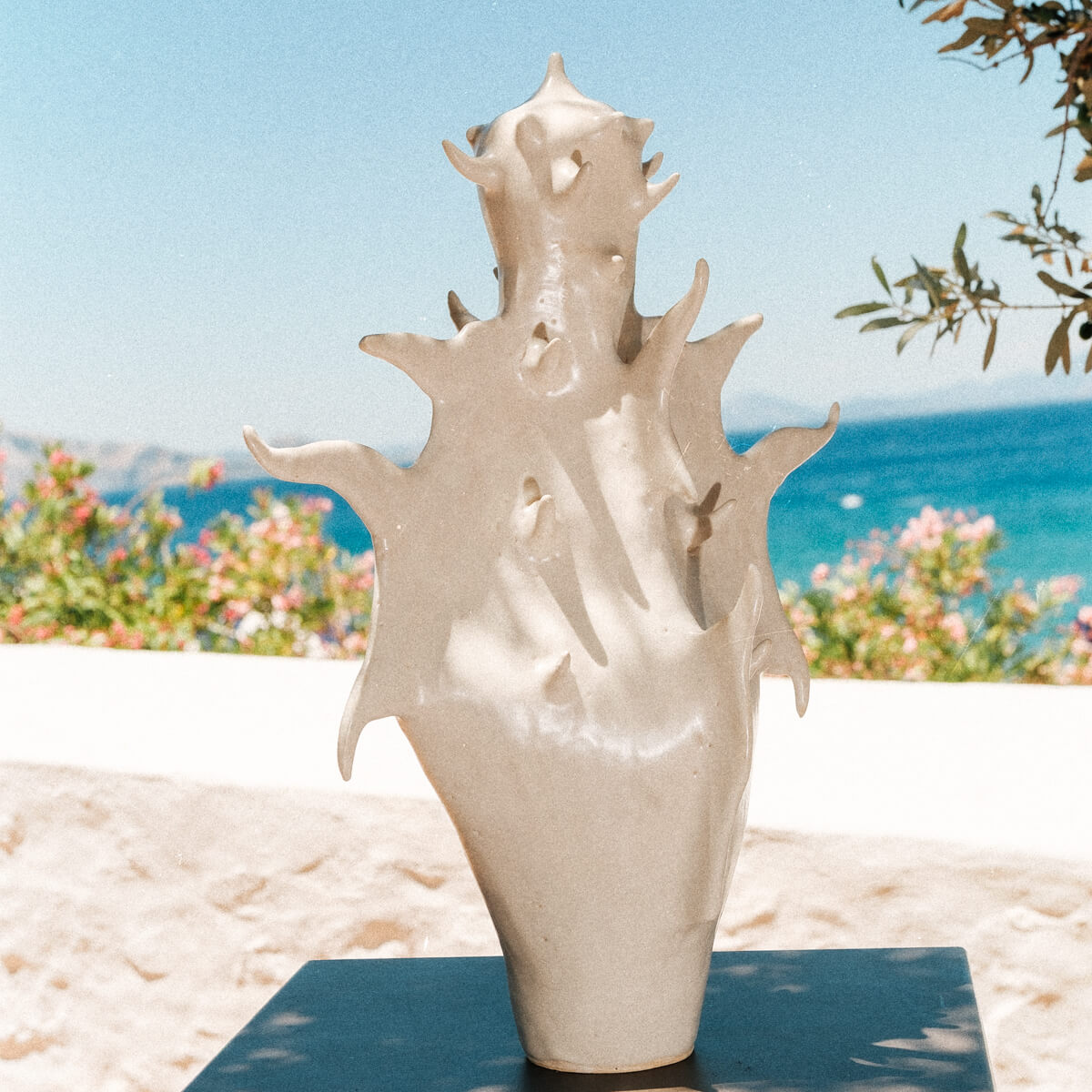
Vessels art exhibition brings together the work of four ceramic artists, Zen Du, Dana Aviv, Nadiia Shapoval, and Diane Alexandre, within the natural landscape of Bellevalia Olive Grove on Hydra Island.
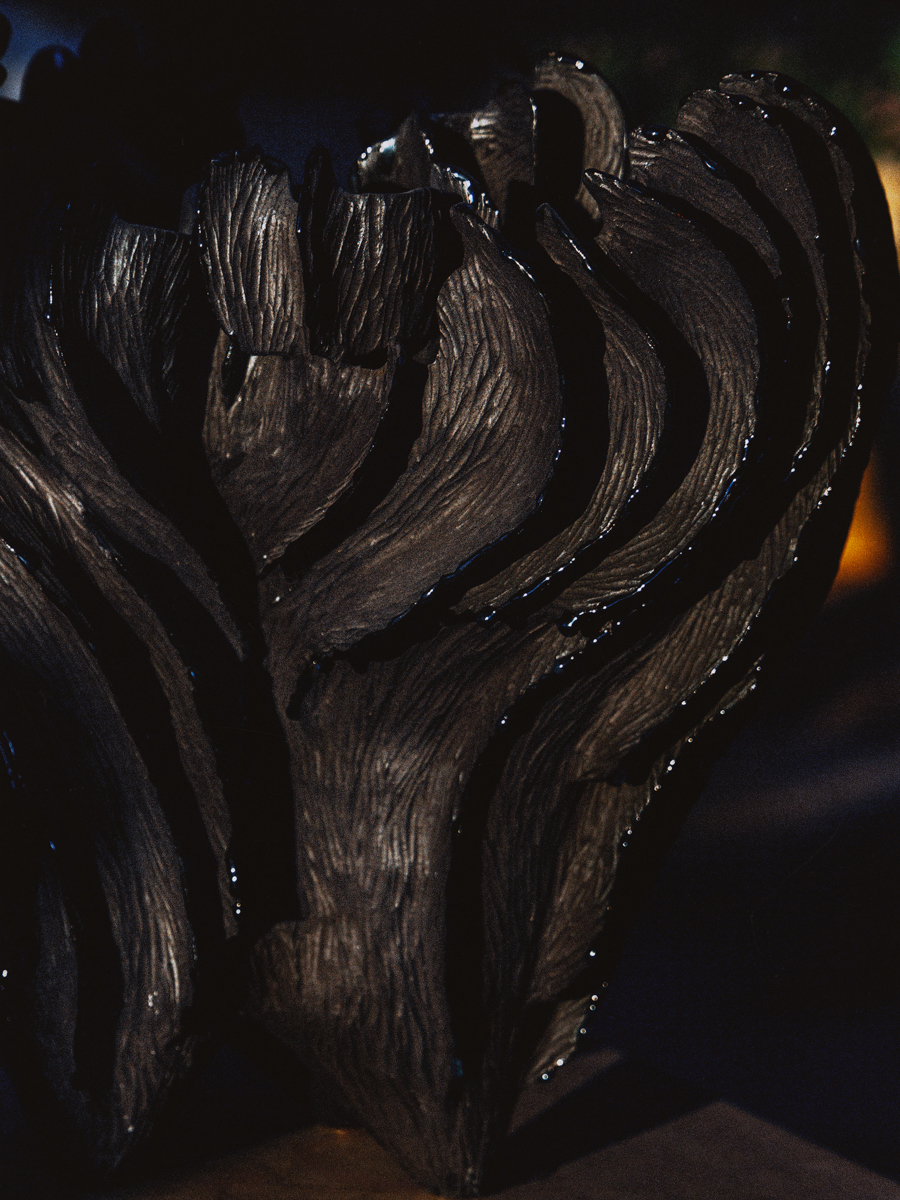
Diane Alexandre, Emergence I, 2024
The vessel is one of humanity’s oldest models for understanding how invisible inhabits form. Before humans used the vessel as a container of material things, it gave form to our imagination. Intuitive, ritualistic, and not yet bound by utility, the ancient vessel established a fundamental distinction between self and world, slowly becoming a structure through which identity could be formed and transmitted.
Situated within Bellevalia Olive Grove on Hydra Island, the site-specific exhibition titled Vessels investigates how the self can be presented through ritual, material experience, and relations with the natural world. The works are displayed within the natural environment from which their material originates. Here, human intuition and natural processes coexist conceptually within the vessels, while their placement among the trees extends this relationship into physical space. The olive grove therefore becomes an active participant in the exhibition's argument. The olive trees act as material witnesses through which life endures beyond its immediate moment. Their weathered surfaces act as material witnesses through which biological and cultural memory extends beyond the immediate moment.
Vessels considers this enduring form as a pre-utilitarian expression of consciousness and a bearer of identity. The works of the four ceramicists assembled here draw upon animistic traditions in which objects are understood as inhabited presences, at once artifacts and apparitions. The artists do not reject the utility or function of the objects so much as propose another order of value that extends beyond them. Through their practices, the artists release ceramics from practical necessity and create vessels as philosophical forms in which inner and outer worlds, human histories and natural forces intersect. Within this site-specific encounter, the boundary between interiority and the external world becomes permeable, bringing human intuition and natural forces into relation.
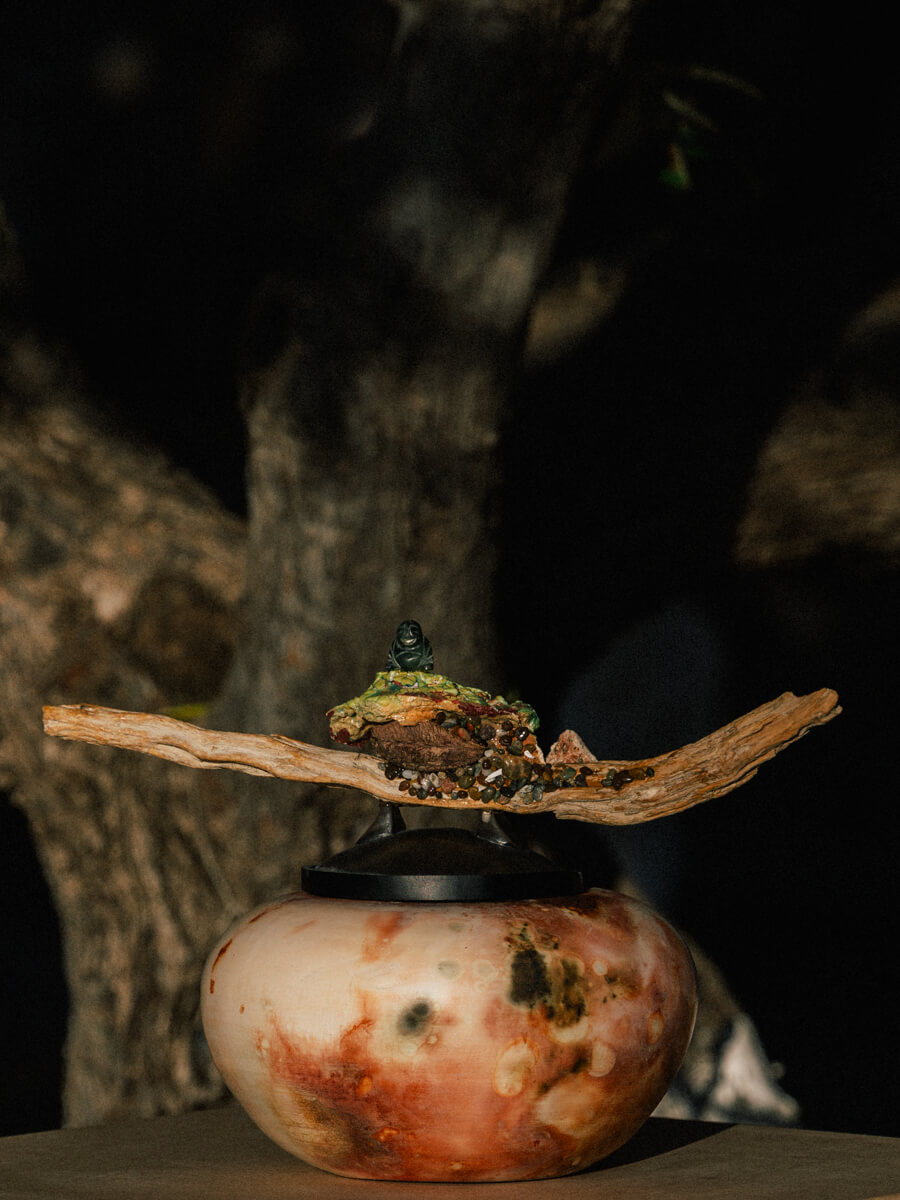
Dream Jar II (2025) by Zen Du
Zen Du’s Dream Jars treat the vessel as a paradoxical structure whose significance derives not from what it contains, but from what it allows to pass through it. The series subverts the utilitarian function of the jar by assigning each work a distinct symbolic and ritual purpose. Bad Dream Jar (2025), composed of saggar-fired ceramic, wood, and cactus skeleton, is conceived as a vessel for collecting and containing nightmares, symbolically absorbing and isolating negative energies. Its form and materials invite a ritual of release, offering closure and psychological protection. Dream Jar I (2025), made of saggar-fired ceramic, wood, twine, copper, bronze, and amber, functions as a vessel for manifestation, activated through focused mental intention. Its kinetic elements and multiple points of visual engagement heighten sensory awareness and sustain concentration on a desired outcome. Named after the ʻōhiʻa lehua, an endemic Hawaiian tree associated with ecological resilience and regeneration, Ohi’a Lehua Dream Jar (2025) combines pencil drawing on pit-fired ceramic with wood, stones, stoneware elements, shells, coral skeleton, sponge, and pearl. Conceived as a collective vessel, it aligns the intentions of multiple individuals, channeling shared energy toward a common vision or goal. Dream Jar II (2025), composed of saggar-fired ceramic, wood, stone, seed, and leather, is intended for mindfulness and emotional regulation. Used during meditation, it enables earlier intentions to be revisited, reconsidered, or renewed. Dream Jar III (2025), made of saggar-fired ceramic, wood, stone, and twine, receives written dreams, intentions, or symbolic objects, transforming them into physical anchors for one’s aspirations. Across the series, the jar is released from practical necessity and reimagined as an intuitive instrument through which dreams, energies, and intentions may be received, contained, and transformed.
Dana Aviv’s handbuilt sculptural vessels can be understood as a dialogue with material. In her practice, the artist listens rather than dominates, allowing form to emerge through attention and reciprocity, and not through control. Her finished works retain traces of the encounter, recording the exchange between hand, clay, fire, and the natural world. Resembling ancient artifacts, Dragon I (2026) and Dragon II (2026) appear to emerge directly from the earth. They carry the disruptive energy of their making before coming to rest as archaeological forms. Fractures, ruptures, and irregular surfaces preserve traces of (self)destruction, suggesting objects transformed through their own undoing. Their surfaces echo the bark of the surrounding olive trees, as though fire had fused clay and wood into a shared material history. Ancient in appearance these works inhabit the threshold between an artifact and living landscape.
Nadiia Shapoval returns the medium to questions that precede modernism. Rather than asking whether ceramics belong within the category of art, the artist considers why the vessel has persisted across civilizations as a primary means of thinking about memory, presence, transformation, and the sacred. Totems, idols, funerary urns, and offering bowls were not merely symbolic forms; they were sites of encounter, capable of carrying memories and beliefs that exceeded the material object itself. Drawing upon centuries-old artistic practices, Shapoval explores her Ukrainian identity and records the identity of her culture, preserving it against erasure. Her work Woman (2022) dissolves modern distinctions between subject and object, figure and vessel. Its significance lies not only in representation, but in its capacity to embody the memories, beliefs, and cultural identity held within its material form.
Biblical traditions describe human beings as “earthen vessels,” fragile material forms capable of containing divine presence. Diane Alexandre’s work reinterprets this metaphor. The artist uses clay to shape vulnerable bodies animated by forces that exceed their material boundaries. Rather than invoking the divine directly, Alexandre recasts the sacred through nature and emotion.
Emergence I (2024) is both a column of rising smoke and the unfolding form of a blooming black orchid. Inspired by the wildfires around Athens, the sculpture absorbs the dread of ecological destruction and confronts it through aesthetic transformation, allowing beauty to emerge from the image of catastrophe. In White Goddess (2022), fragility becomes inseparable from defense. The work appears delicate and ephemeral, but its spiked surface denies proximity, transforming the vessel into both an exposed body and a protective structure. Throughout Alexandre’s practice, the ceramic form functions as a psychic threshold that neither erases nor conceals anxiety, but sublimates it into beauty.
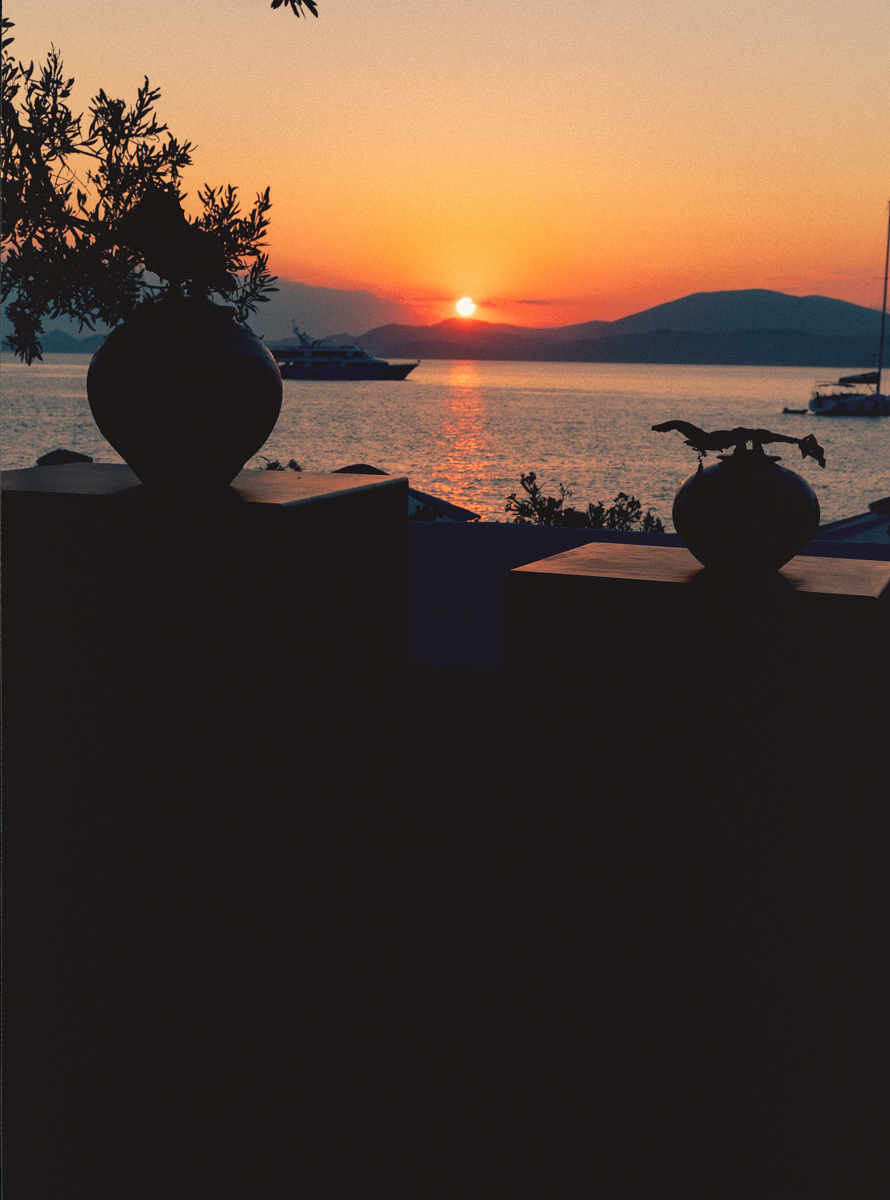
Bellevalia's Olive Grove.
In a broader art-historical reassessment of ceramics as a major artistic medium. For centuries, ceramics occupied an uncertain position between fine art, craft, ritual object, and utilitarian design. During the twentieth century, this distinction increasingly dissolved as artists recognized clay as a medium capable of addressing fundamental aesthetic and philosophical questions. Figures such as Pablo Picasso, Joan Miró, and Bernard Leach approached ceramics as a means of reconnecting modern art with touch, transformation, and material immediacy. Their engagement expanded the status of clay, establishing it as a serious site of artistic and intellectual inquiry.
Vessels proposes a dialogue between biological and cultural time, between the endurance of nature and the endurance of artifacts. Istead of opposing nature and culture, it reveals their mutual entanglement. Ultimately, the exhibition itself becomes a vessel or a receptive space in which objects and histories come together. An inquiry into one of humanity's oldest conceptual forms. The vessel appears here as a model for understanding how meaning takes form in the world.
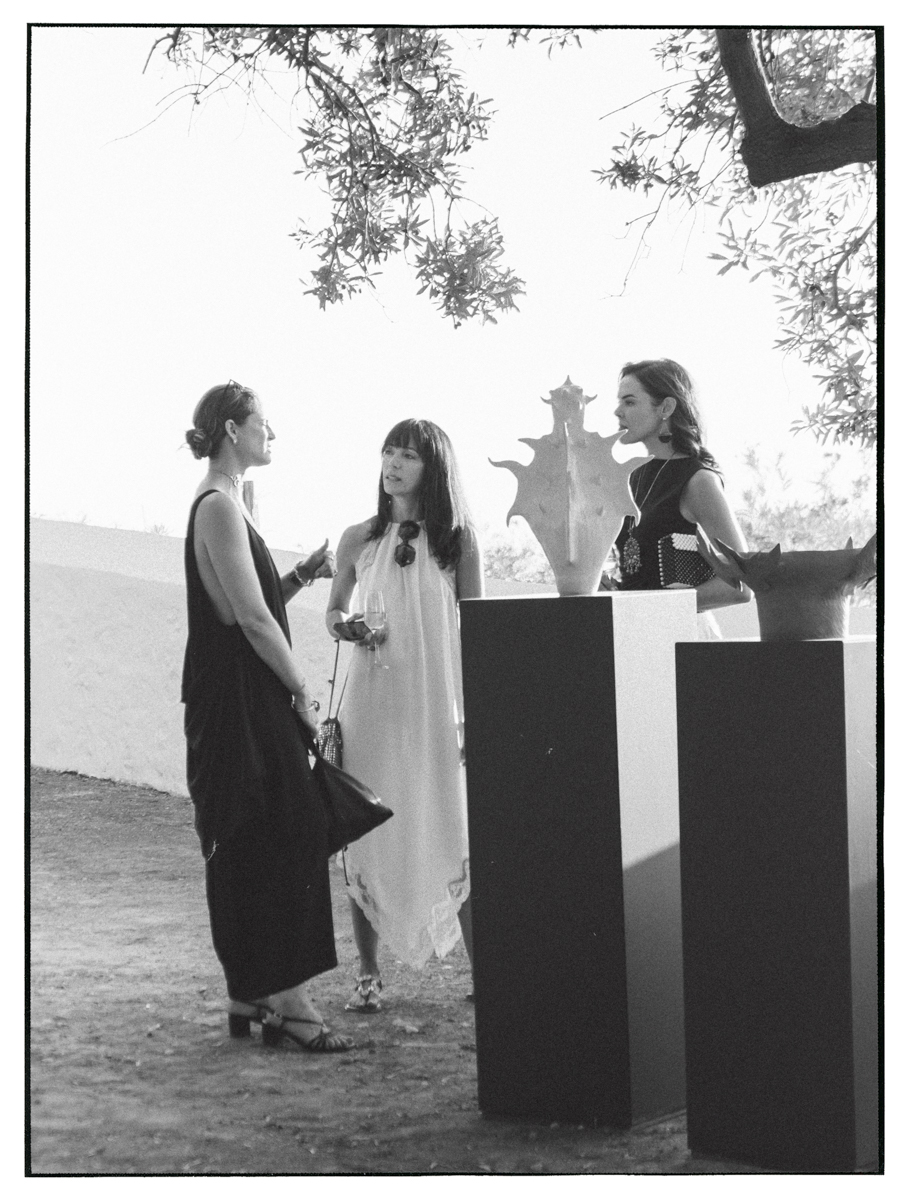
Diane Alexandre presenting White Goddess (2023) and Birds #2 (2023) as part of the exhibition Vessels.
Dreams Jars (2025) by artist Zen Du at Bellevalia's Olive Grove as part of Vessels exhibition.
Art critic Timothee Chaillou with artists Dana Aviv and Dianne Alexandre
Photo Credits: Douglas Martin Eveleigh
Location: Bellevalia Olive Grove, Hydra, Greece
Produced by: Mnemosyne Projects & Bellevalia Hydra
Exhibition Design: Marilia Lezou
Ekaterina
Juskowski
Ekaterina Juskowski is a writer and independent curator active in the international fields of art, design, architecture, and antiques. Her research and writing explore the relationship between material culture, memory, and place, examining how objects, landscapes, and artistic practices preserve cultural knowledge. Her engagement with contemporary art focuses on artists whose work investigates questions of materiality, identity, heritage, and belonging.
Douglas
Eveleigh
Douglas Eveleigh is a photographer from Massachusetts, based in Athens, Greece. Working across lifestyle, editorial, events, football, fashion, and documentary photography, he creates images that balance authenticity, energy, and visual storytelling, capturing people and places with a keen eye for atmosphere, culture, and human connection.
Ekaterina Juskowski
Ekaterina Juskowski is a writer and independent curator active in the international fields of art, design, architecture, and antiques. Her research and writing explore the relationship between material culture, memory, and place, examining how objects, landscapes, and artistic practices preserve cultural knowledge. Her engagement with contemporary art focuses on artists whose work investigates questions of materiality, identity, heritage, and belonging.
Douglas Eveleigh
Douglas Eveleigh is a photographer from Massachusetts, based in Athens, Greece. Working across lifestyle, editorial, events, football, fashion, and documentary photography, he creates images that balance authenticity, energy, and visual storytelling, capturing people and places with a keen eye for atmosphere, culture, and human connection.