Artist Talk: The Paradox of Belonging and the Fragility of Attachment
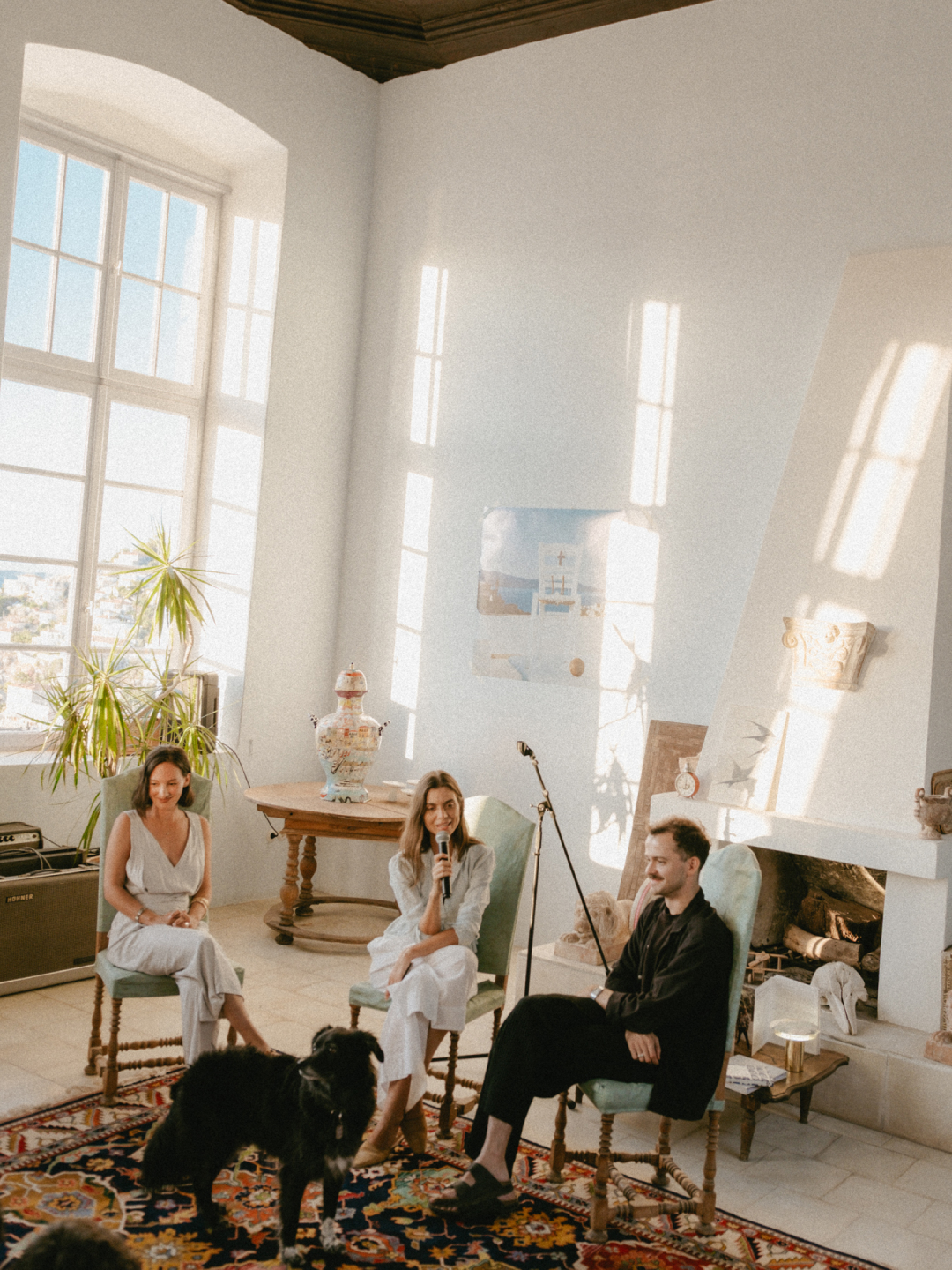
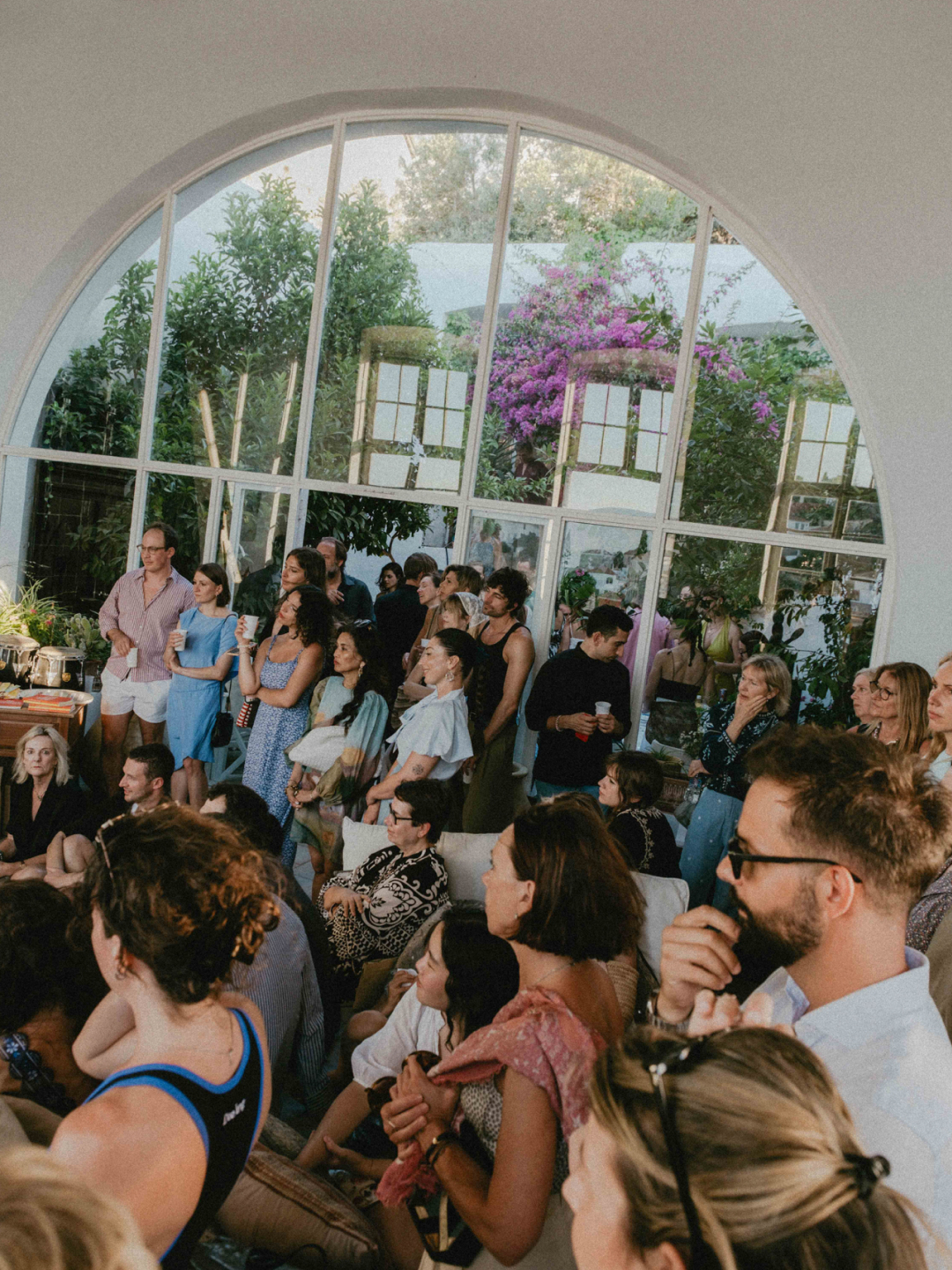
The talk The Paradox of Belonging and the Fragility of Attachment, held at the Old Carpet Factory on June 21, 2026, brought together photography, curatorial practice, and architecture in a conversation about individual and collective perceptions of belonging and how they are shaped through memory, spatial experience, image-making, and the emotional landscapes we inhabit.
Through their different disciplines, photographer Stefan Dotter,, architect Marilia Lezou, and curator Ekaterina Juskowski reflected on the ways we construct, negotiate, and reimagine our connections to objects, environments, and people in an increasingly fluid world.
How do we come to belong, and what happens when attachments become fragile, contested, or transformed? The ongoing interdisciplinary discussion explored the complex relationship between place, identity, and personal belongings as forms of attachment.
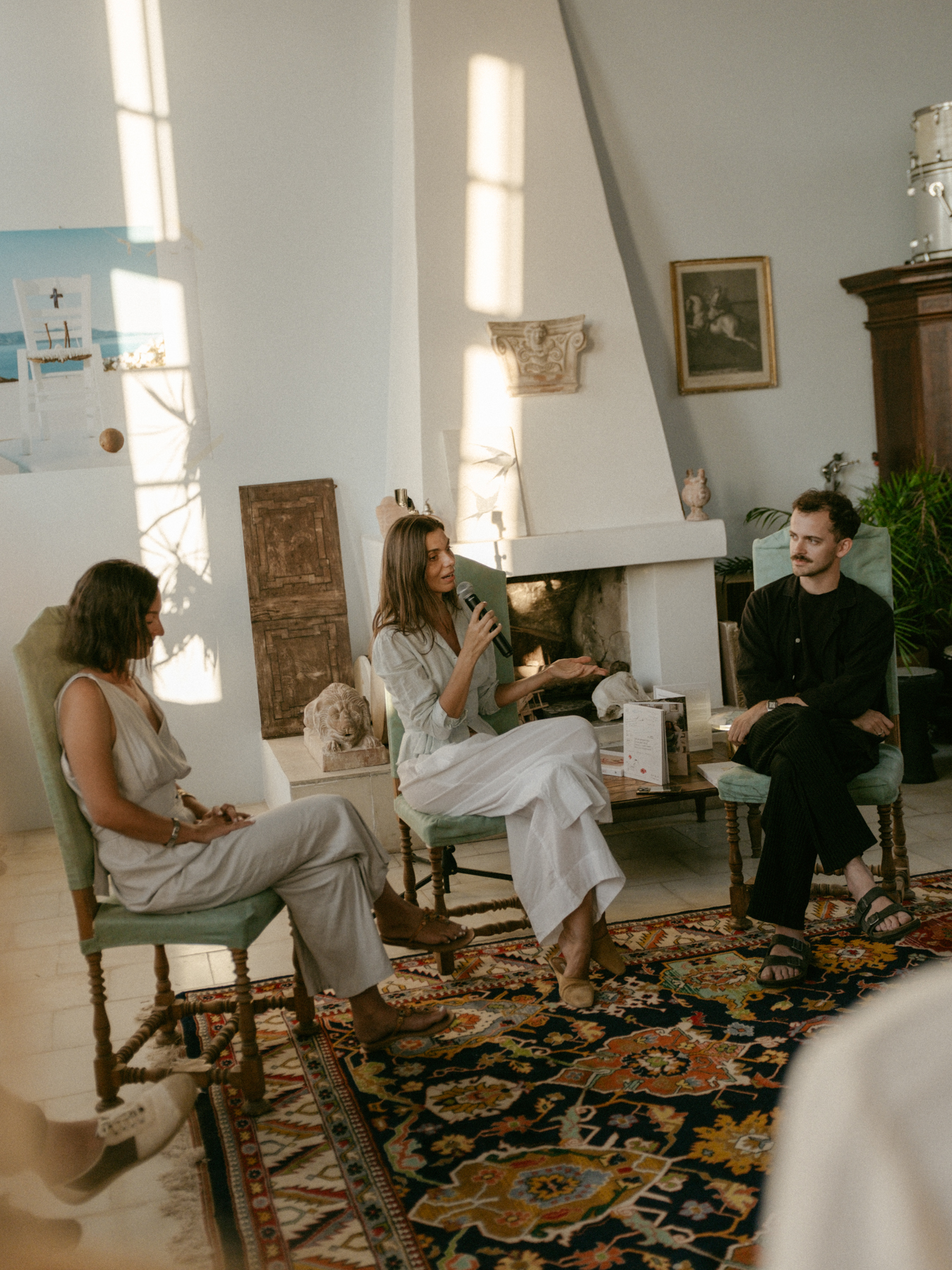
Ekaterina Juskowski: Good evening, and thank you all for being here today.
The question of belonging often appears deceptively simple. Yet the moment we begin to ask who belongs, where belonging comes from, or how it is sustained, the certainty of those answers starts disappearing.
As a curator, much of my work revolves around creating encounters between disciplines, people, and ideas. I am particularly interested in how identities are shaped through relationships to places, objects, histories, and to one another, and also in how contemporary art can make visible the structures that connect us.
Tonight I am joined by two people who have approached the question of belonging from very different positions. Photographer Stefan Dotter arrived on Hydra as an artist-in-residence, encountering the island as both an outsider and participant. Through the development of his photographic project BELONGING(S), he found himself navigating Hydra's social networks, local histories, and competing notions of identity and attachment.
Architect Marilia Lezou came to Hydra through restoration work, specializing in the conservation and adaptive reuse of historic properties. Her involvement with the restoration of the Bellevalia project and, more recently, her role as a founding curator of the Bellevalia Olive Grove Residency by Mnemosyne Projects, which this year supports BELONGING(S) alongside the Old Carpet Factory, has given her a distinct perspective on the relationships between people and places.
What interests me is that, across photography and architecture belonging repeatedly resists fixed definitions. Instead, it emerges as an ongoing process shaped by memory, relationships, care, displacement, and exchange.
Stefan's project invites us to reconsider the meanings we attach to objects and places, while Marilia's reflections remind us that belonging is sustained through origin or permanence, and at the same time, through responsibility, stewardship, and participation.
Together, these perspectives suggest that belonging is both fragile and resilient: constantly challenged, continuously negotiated, and repeatedly remade through our interactions with people, places, and the material worlds around us.
With that, I'd like to begin by asking Stefan to tell us how this project first came into being.
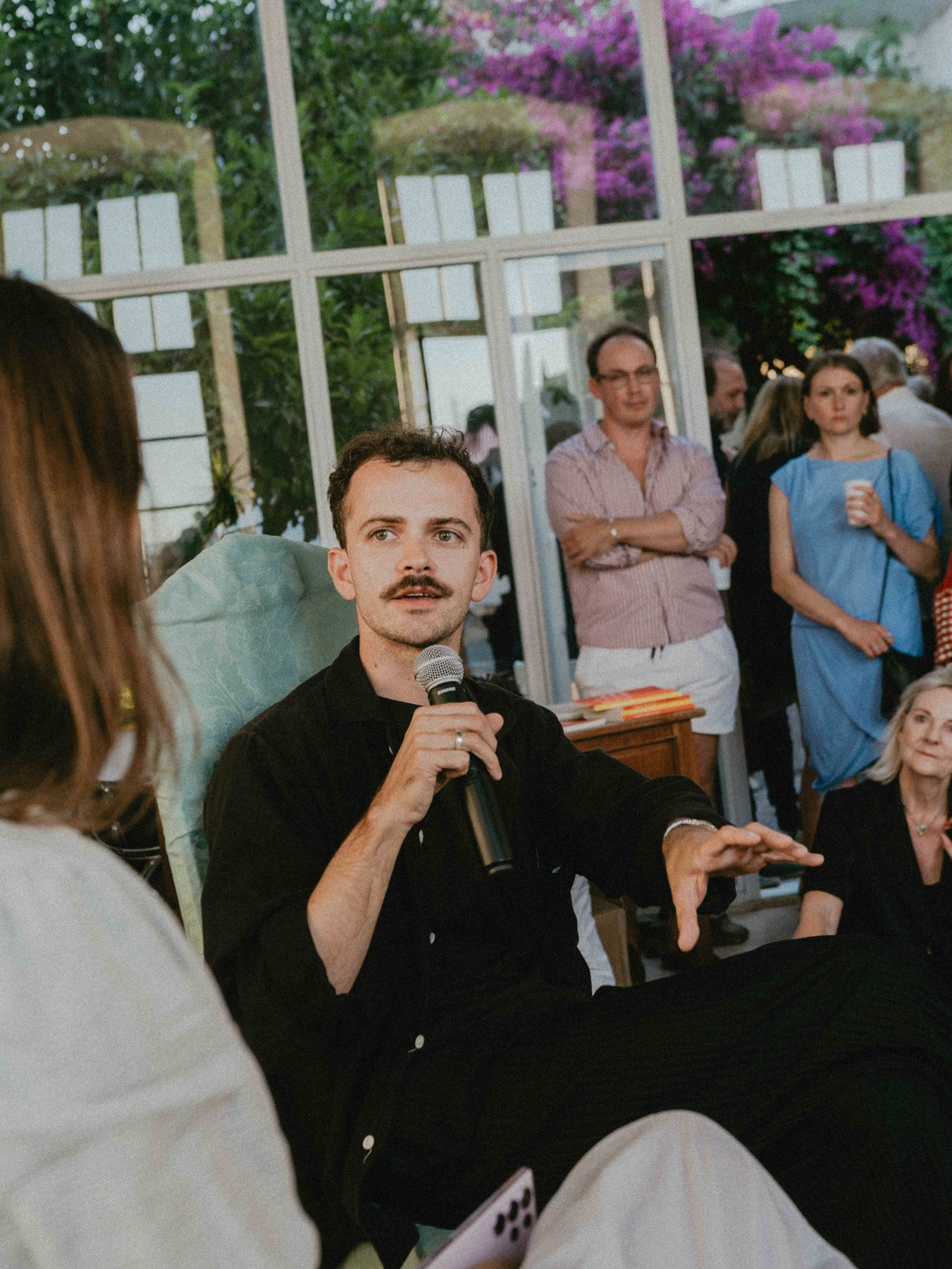
SD: I first applied to the Hydra Art Residency two years ago and received no answer. Last year, I followed up with a new project inspired by the idea of six degrees of separation. My intention was to begin with a small group of approximately eight island residents, creating still-life photographs that would reflect the relationships between individuals and the objects, spaces, and belongings that hold personal significance.
Rather than working from a fixed list of participants, I wanted to invite a few people and then ask each of them to recommend someone else from the community, allowing the project to expand organically through chains of trust, familiarity, and local knowledge. I thought this approach would allow me to map the island's unique web of relationships while revealing hidden connections across generations, professions, and social circles.
I imagined the resulting body of work functioning both as a portrait of individuals and as a collective portrait of the island.
But things did not go exactly as planned.
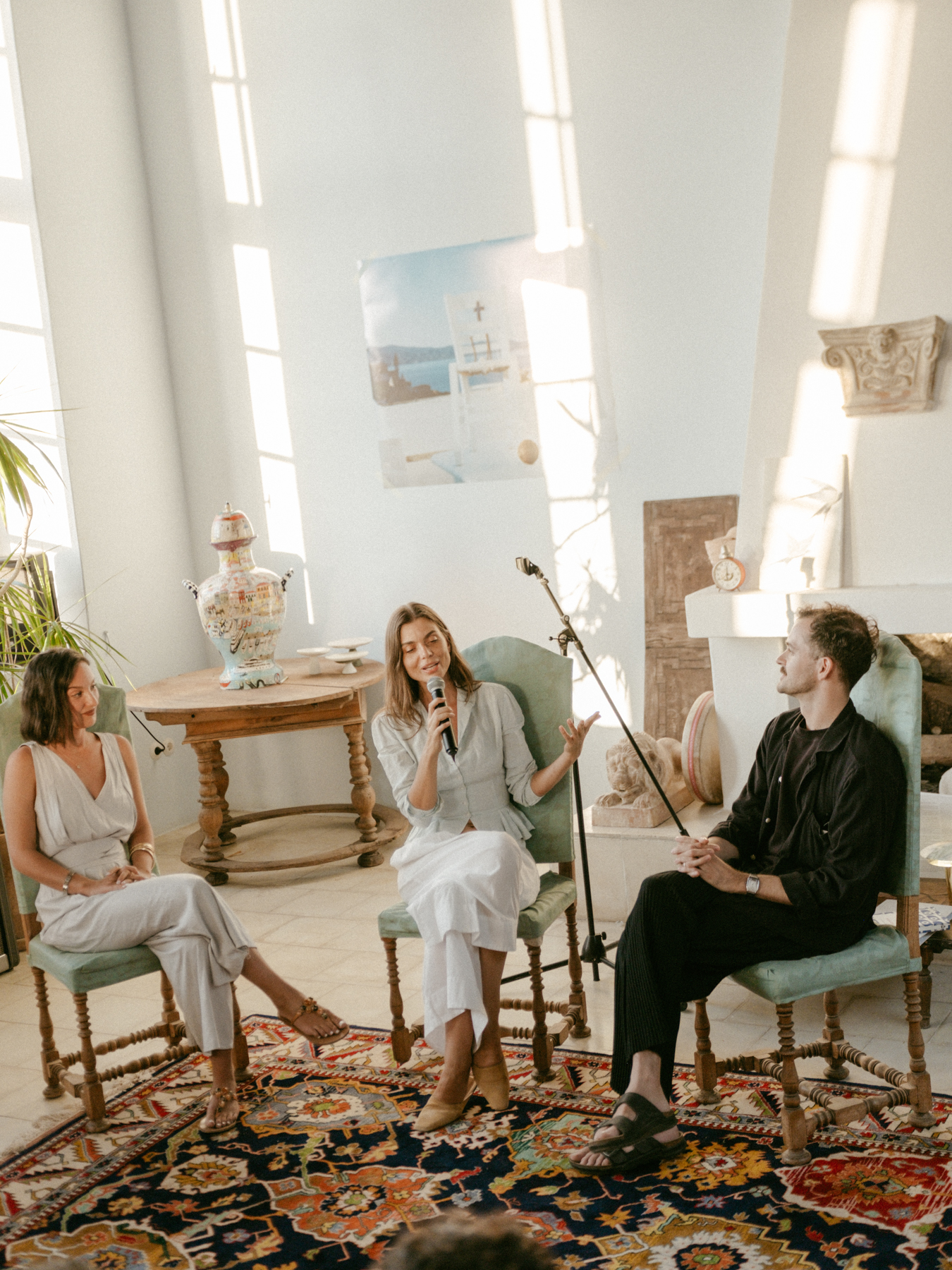
EJ: Mnemosyne Projects art residencies function as a close collaboration between an artist and a curator. During his residency Stefan arrived in Hydra a few days before me and was hosted here at the Old Carpet Factory, which provided an ideal opportunity to meet an initial group of local residents through introductions facilitated by Stephan Colloredo-Mansfeld's network.
By the time I arrived on the island, I found Stefan in the midst of an agitated discussion centered around an apparently impossible question: Who is a true Hydriot?
Every person he met during his first days on the island seemed to hold a firm conviction about who belonged and who did not. Belonging quickly emerged as a central theme in our project.
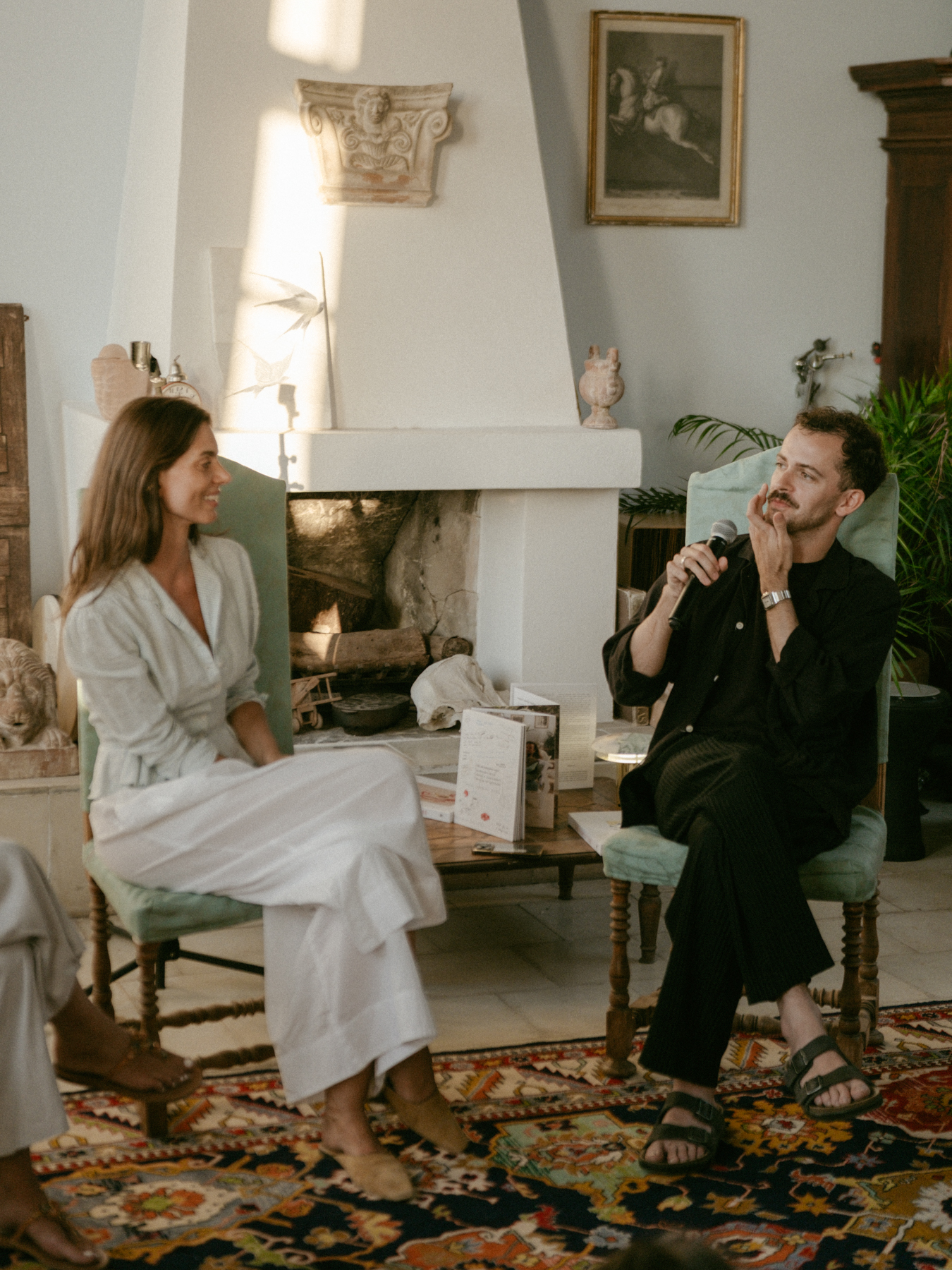
SD: It was evident that Hydra exists as a field of competing realities, each fiercely protected. I attempted to construct my own definition of belonging by asking a broader question: Who really belongs? This took me to photographing native plants and animals, they were the ones who really belong here, I thought. But the paradoxical conclusion of my explorations was simple: everybody and nobody belongs.
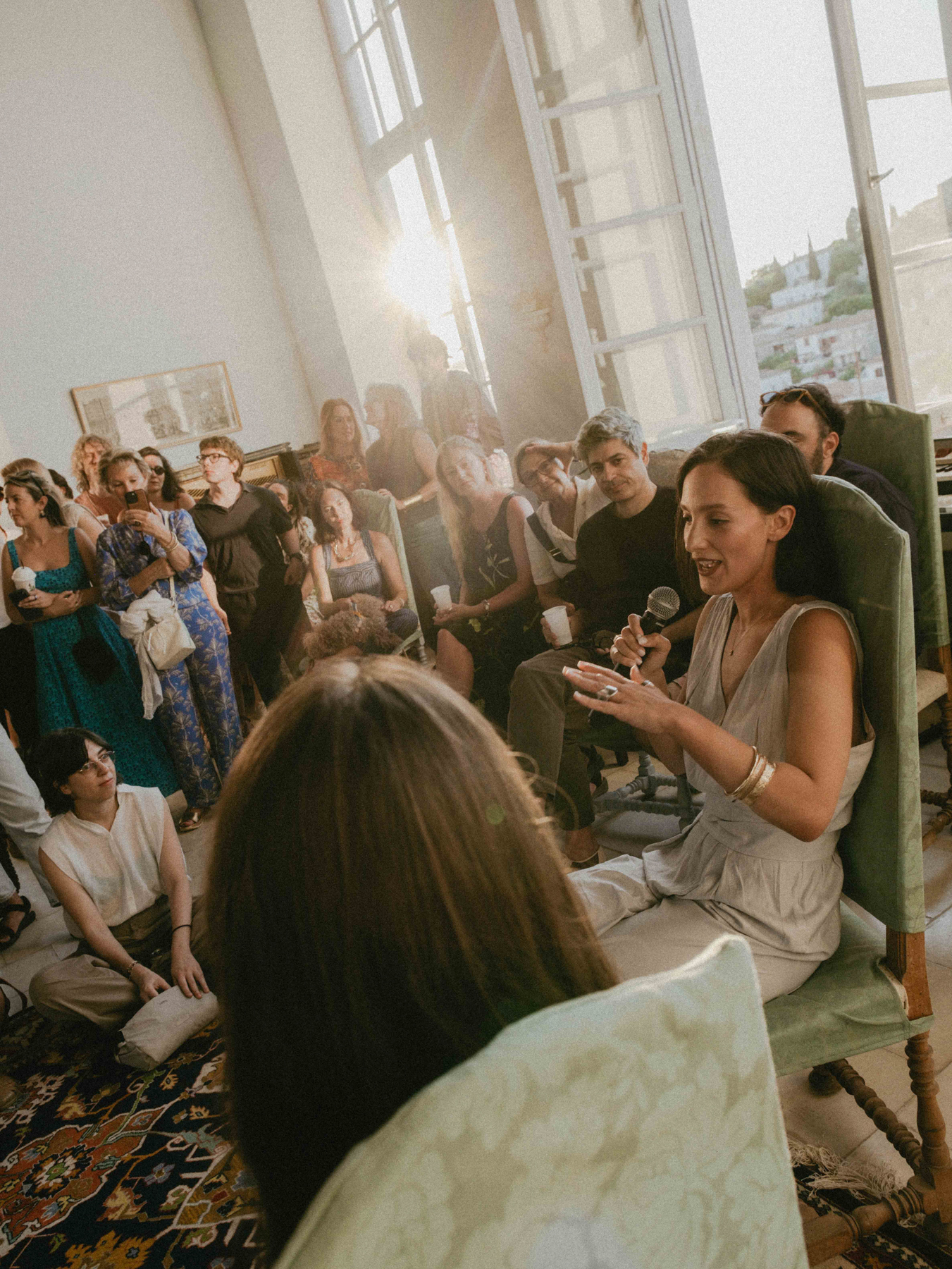
EJ: The resulting body of work Stefan created took the form of a visual essay composed of borrowed possessions: objects temporarily displaced from their owners and scattered across the island. Native plants coexist with discarded plastic by-products, traces of human presence bleed into the landscape, imported objects sit beside those originating on Hydra, all transformed through use, care, and time.
Removed from their original contexts, these belongings resist clear attribution, mirroring the unsettled nature of identity itself. In this deliberate misalignment of objects and places, BELONGING(S) proposes that belonging is inherently unstable and continuously shaped by those who pass through, remain, or lay claim to the island.
Marilia, when we first met, you immediately spoke about belonging, whiched seemed to be a central thread in your work at Bellevalia. How did this idea come up in your practice, and in what ways has it guided your work on Hydra?
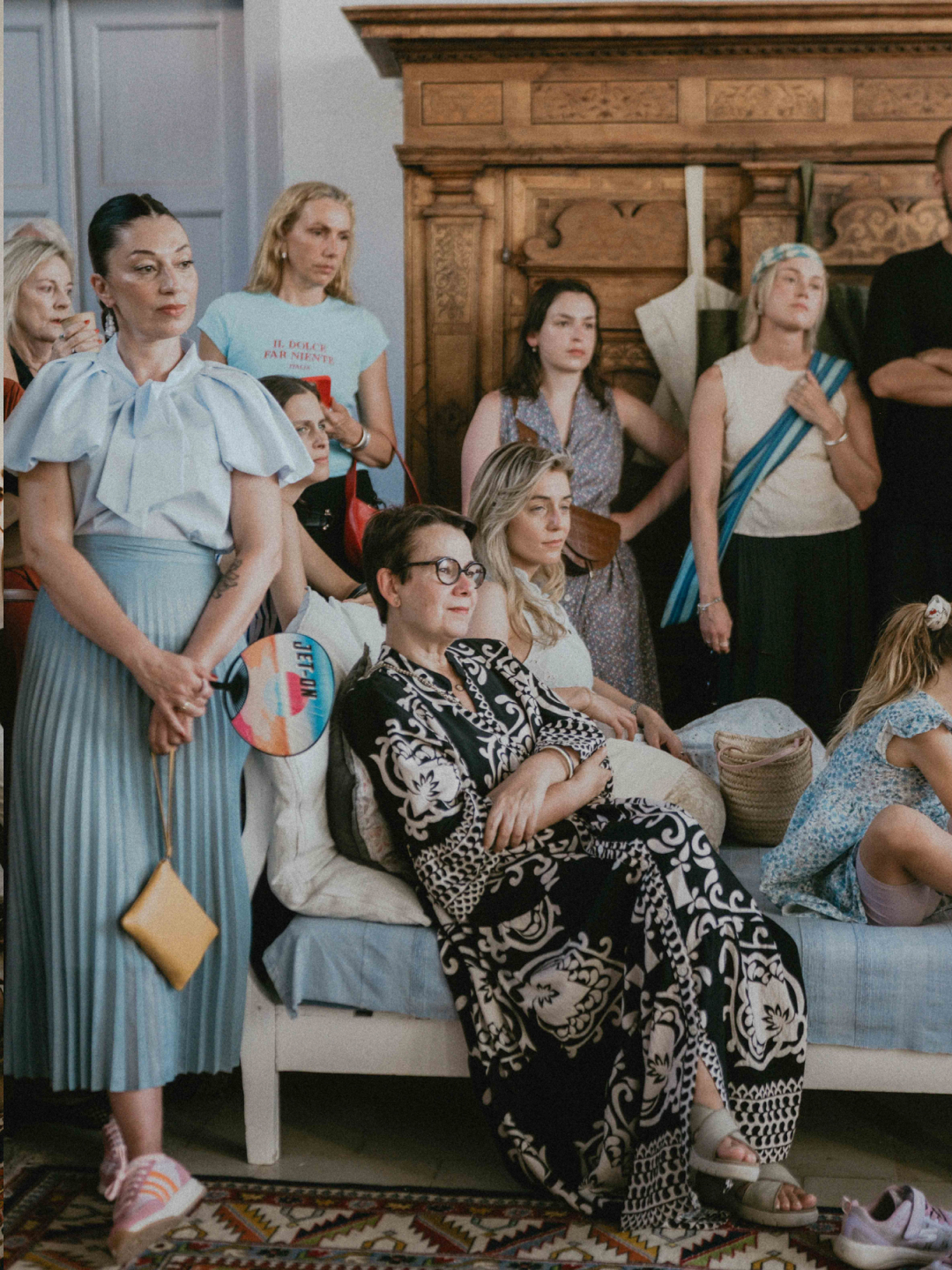
ML: My relationship with Hydra was formed through my work. When I was invited by the Rabies family to help with the restoration of their century-old Hydriot building, the significance of the experience was less in the project itself. The invitation itself represented an act of trust and an opportunity to engage with one of the island's most intimate forms of belonging.
Working on Hydra during the winter months, I encountered life beyond the familiar images of Hydra's summer season. It included maintenance, repair, stewardship, and care. These observations focused my attention less on the question of who belongs to Hydra and more on the how is belonging sustained? Part of my practice restoring historical properties, an in particular at Bellevalia, requires removing some parts and adding new parts of the building without disrupting the sense of belonging.
The reasons Stefan Dotter’s project resonates so strongly with me is because his work raises a compelling question: If an object is displaced is it still representative of its place of origin / how potent is it with ingredients pure and original of its mother. As an architect, I find this question deeply relevant because it can be extended beyond objects to buildings, places, and even people.
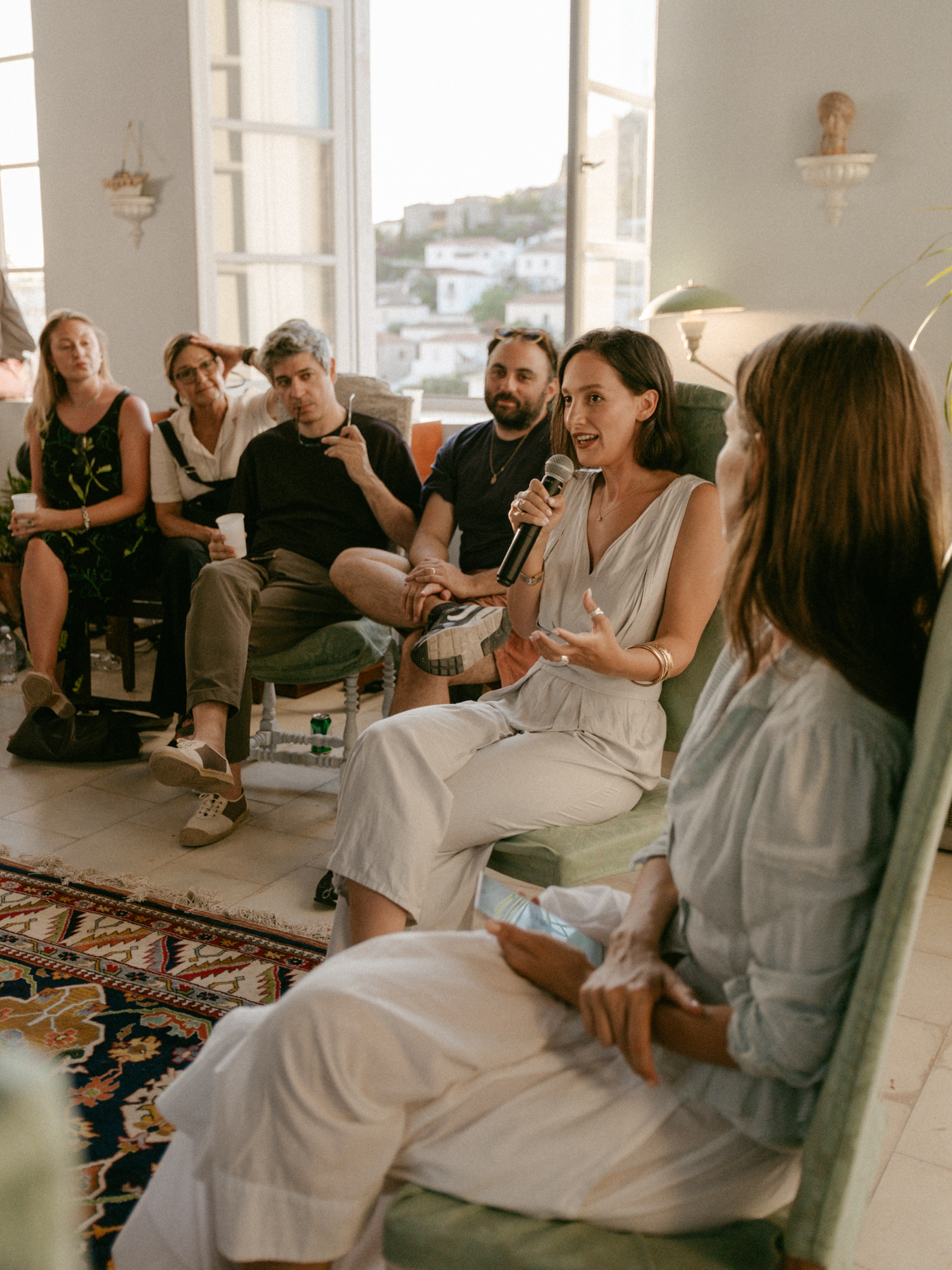
ML: At first glance, one might argue that belonging is less about origin and more about participation. There is certainly truth in that. Places are shaped not only by those who were born there, but also by those who care for them, contribute to them, maintain them, and commit themselves to them over time.
Yet participation alone is not enough. It becomes meaningful when it is accompanied by responsibility, stewardship, and attention. My own understanding of Hydra developed through the responsibility of working on a building entrusted to me by people deeply connected to the island. Through that experience, I came to appreciate a quality that I believe lies at the heart of both architecture and belonging: resilience.
We often speak about resilience in environmental or structural terms, but I have come to think of it as a cultural condition as well. Resilience is the ability of a place to absorb change without losing its sense of continuity. It allows a community, a building, or a landscape to evolve while remaining connected to its memories, values, and identity.
Hydra demonstrates this remarkably well. The island we encounter today is not the Hydra of a century ago, nor even of a generation ago. It has continuously adapted to new social, economic, and cultural realities. Yet despite these transformations, it retains a powerful sense of itself.
The same can be said for its architecture. Hydra's buildings have endured not because they have remained untouched, but because they have been continuously inhabited, repaired, adapted, and cared for. Their resilience lies precisely in this balance between preservation and transformation. They change, yet remain recognizably rooted in the place from which they emerged.
As an architect, this has profoundly shaped the way I think about belonging. Belonging is not achieved by resisting change. Rather, it emerges through an ongoing relationship between continuity and adaptation, between inheritance and participation, between memory and the responsibilities of the present.
ML: Resilience is often understood in environmental or structural terms, but it can also describe a cultural condition. It is the capacity of a place to absorb change while maintaining continuity with its values,memories, and identity. Hydra demonstrates this remarkably well.
Its buildings have endured because they have been continuously occupied, repaired, adapted, and cared for. Their resilience lies in their ability to evolve while remaining connected to the place from which they emerged.
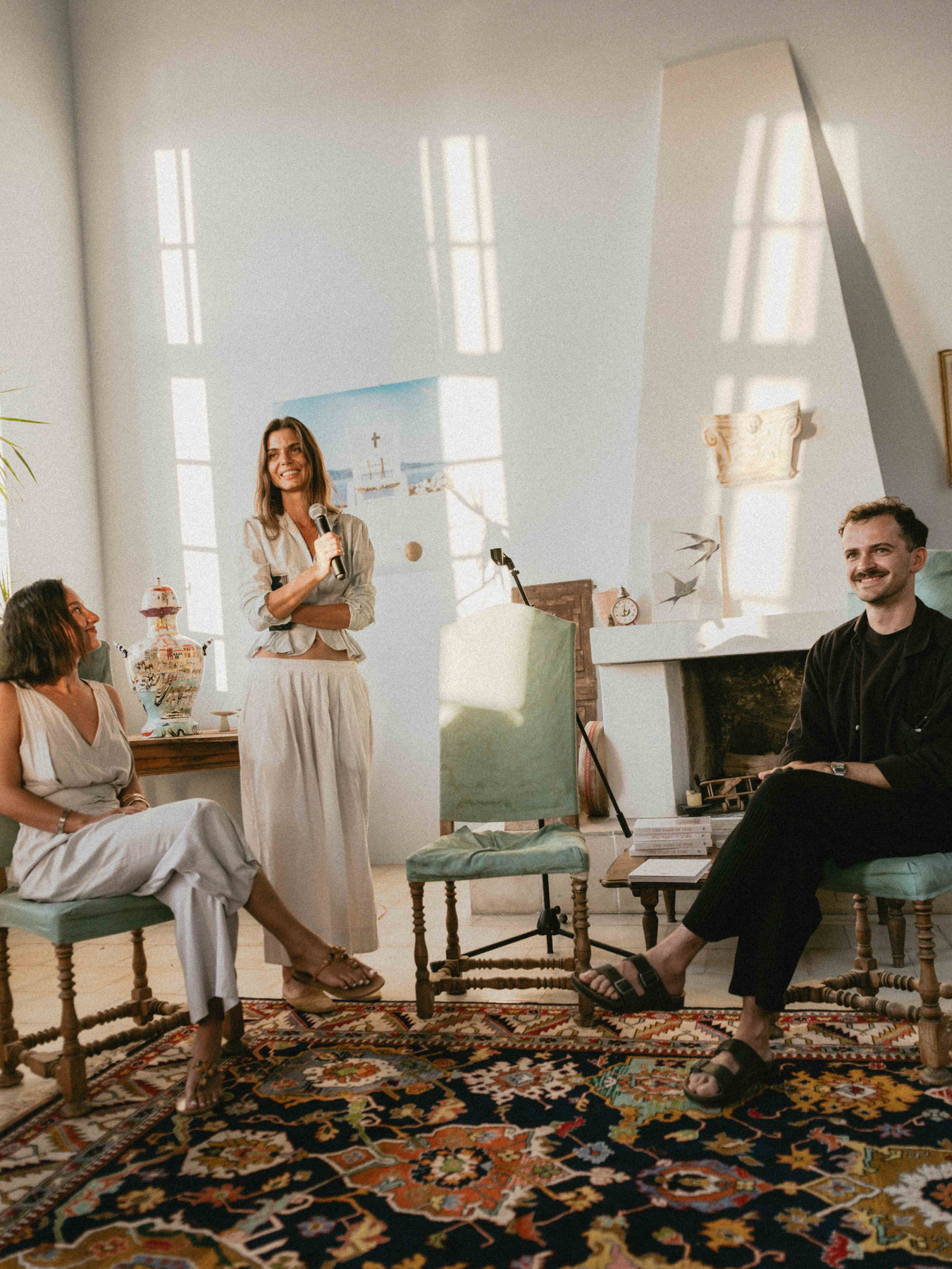
EJ: Before we conclude, I would like to thank Stefan Dotter, Marilia Lezou, the Old Carpet Factory, and everyone who contributed to this conversation and the development of BELONGING(S).
The project will continue to evolve. This year's presentation marks only the beginning of it. The complete body of work will be presented next year in a dedicated exhibition, bringing together the full visual essay that Stefan has developed during his residency on Hydra.
As a preview, we are delighted to present a selection of six limited-edition prints from BELONGING(S) at Bellevalia Olive Grove.
Thank you all for being part of this discussion, and we invite you to continue the conversation through the works on view at Bellevalia Olive Grove.